
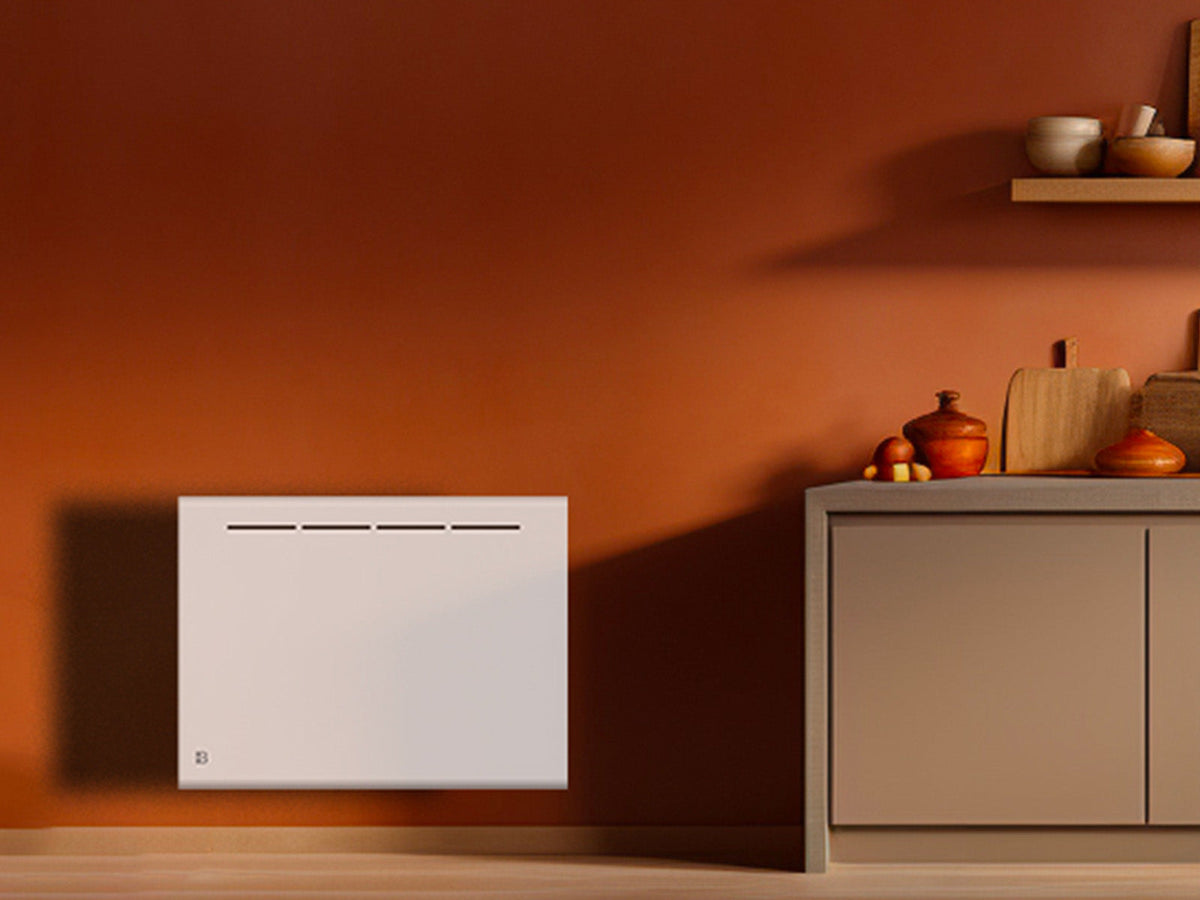
The kitchen is one of the liveliest rooms in the home. Between meal preparation, time spent with family and daily comings and goings, it is subject to many temperature fluctuations. To maintain a pleasant temperature throughout the day, it is important to choose a radiator suited to the specific features of this space. An efficient heating system must be able to respond quickly to temperature changes while remaining discreet, practical and energy-efficient.
Why choose a radiator suited to the kitchen?
A room with specific needs
Unlike a living room or bedroom, the kitchen already benefits from several heat sources generated by everyday activities. The heating must therefore be able to effectively supplement this heat without causing overheating.
Rapid heat-up
In a kitchen, it is not always necessary to heat the room continuously. A responsive radiator quickly provides a comfortable temperature when the room is in use, while avoiding unnecessary energy consumption.
Often limited space
Modern kitchens devote considerable space to cabinets, worktops and appliances. The radiator must therefore fit in easily without obstructing movement or the room’s layout.
An easy-to-maintain appliance
Cooking splashes, steam and changes in humidity also make it important to choose a radiator that is easy to clean and designed for everyday use in this environment.
Bestherm solutions for efficiently heating a kitchen
Dry-inertia radiators with a ceramic core
Gentle, responsive heat
Ceramic radiators are an excellent solution for well-insulated kitchens. This technology provides immediate comfort from the moment the radiator is switched on, while maintaining a pleasant temperature even after the heating has been turned off.
An ideal solution for well-insulated kitchens
Thanks to their excellent responsiveness and ability to retain heat, this type of radiator is particularly well suited to kitchens used every day and benefiting from good thermal insulation.
Radiators with a dual ceramic core
Even faster heat-up
In kitchens where windows and doors are frequently opened or the temperature changes rapidly, the dual ceramic heating core provides a particularly effective solution. The heating film distributes heat immediately when the radiator is switched on, providing an almost instant feeling of comfort.
Consistent comfort throughout the day
While the heating film provides responsiveness, the ceramic core stores heat and releases it gradually. This combination helps maintain a stable temperature while optimizing energy consumption.
Vertical and skirting-board-style radiators
Optimize the available space
In many kitchens, wall space is limited by wall units, backsplashes, or household appliances. Vertical radiators and skirting-board-style models are perfectly suited to this constraint.
A discreet and practical integration
Installed on a narrow wall or close to the floor, these formats preserve the available space while ensuring effective heat distribution. Their discreet design also makes them easy to integrate into contemporary kitchens without compromising the room's aesthetics.
Which technology should you choose for your kitchen?
Ceramic radiator
Ideal for:
- Well-insulated kitchens
- Daily use
- Controlled energy consumption
Ceramic radiator + heating film
Ideal for:
- Poorly insulated kitchens
- Rooms subject to temperature fluctuations
- Frequent opening of doors and windows
Vertical or skirting-board-style radiator
Ideal for:
- Kitchens with limited available space
- Modern layouts
- Complex layouts
In summary: Bestherm's advice
Choose a smart radiator
To optimize comfort and energy consumption in your kitchen, choose a radiator equipped with a programmable or connected thermostat. This allows you to adjust the temperature precisely to the times when the room is actually being used and avoid heating it unnecessarily.
FAQ: Which radiator should you choose for a kitchen?
What is the best electric radiator for a kitchen?
Ceramic inertia radiators are particularly well suited to well-insulated kitchens, thanks to their ability to distribute gentle, even heat.
For kitchens more exposed to temperature fluctuations, dual-heating-core models offer greater responsiveness.
Is an inertia radiator suitable for a kitchen?
Yes. An inertia radiator helps maintain a stable temperature despite fluctuations caused by cooking or frequent opening of doors and windows.
It also provides an excellent level of comfort while limiting energy consumption.
Which radiator format should you choose for a small kitchen?
In a kitchen where space is limited, vertical or skirting-board-style radiators are an excellent solution.
They help optimize the room layout while ensuring effective heat distribution.

