
Electric Auxiliary Heater
Filters
3 products
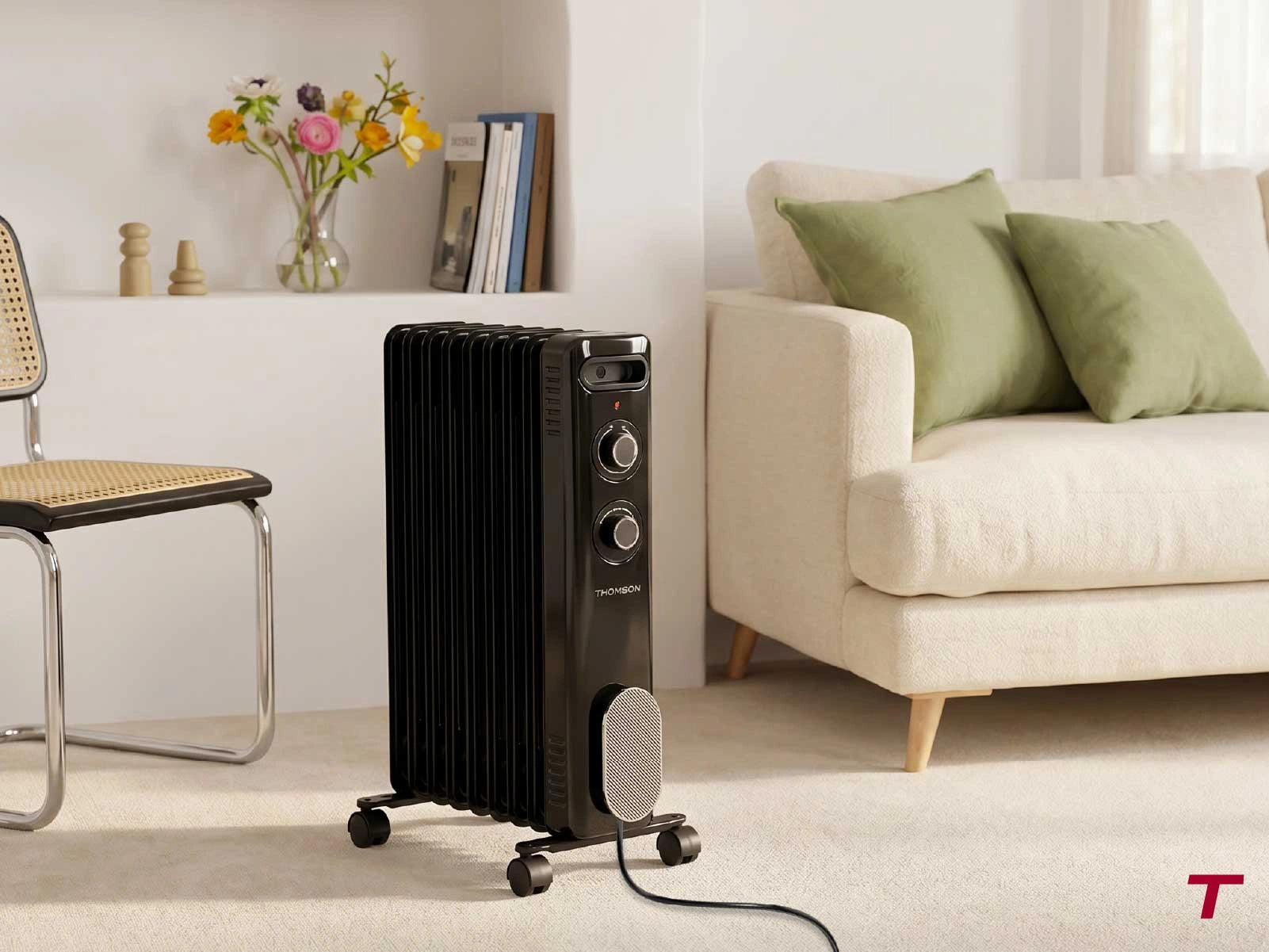
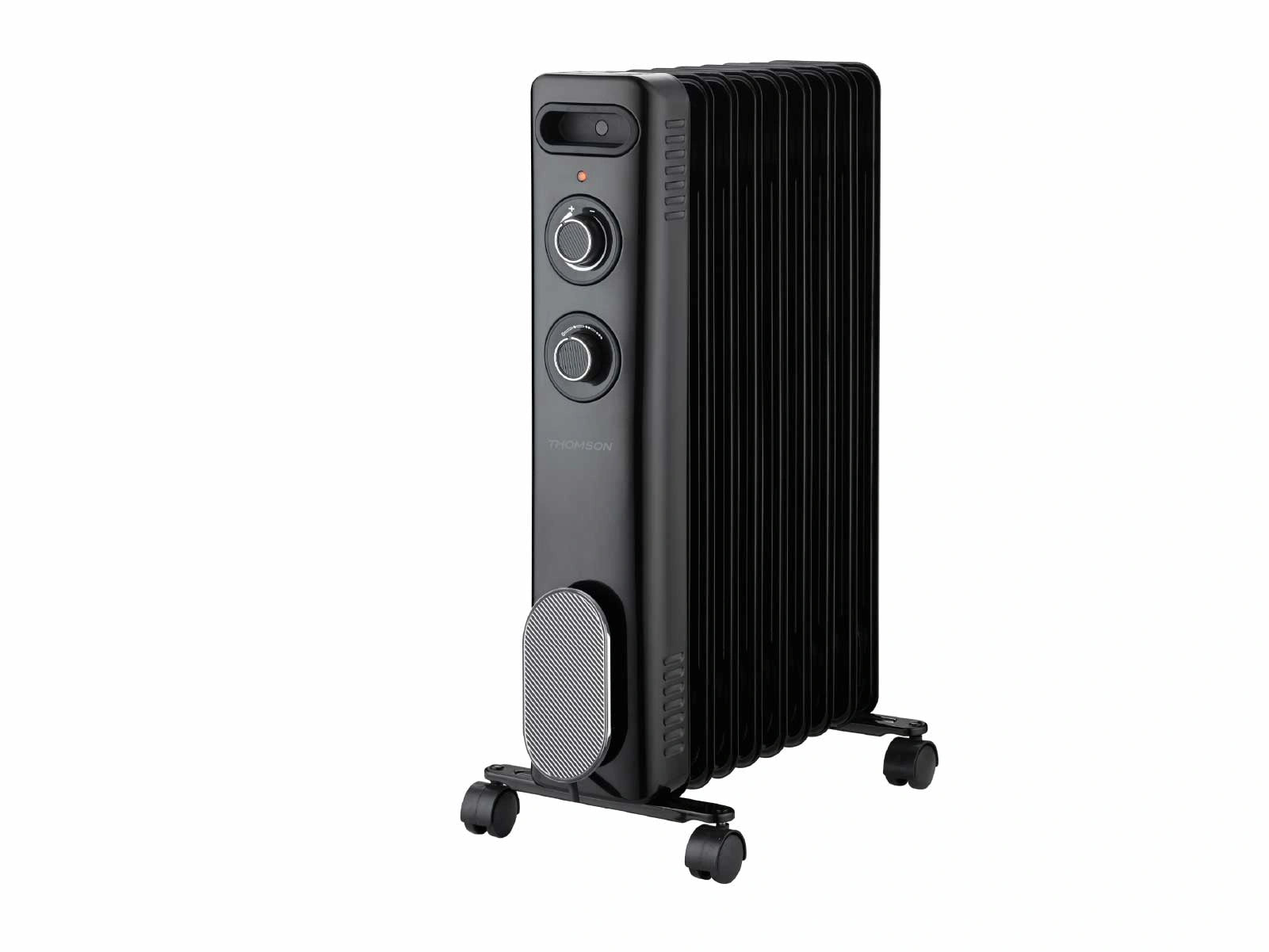
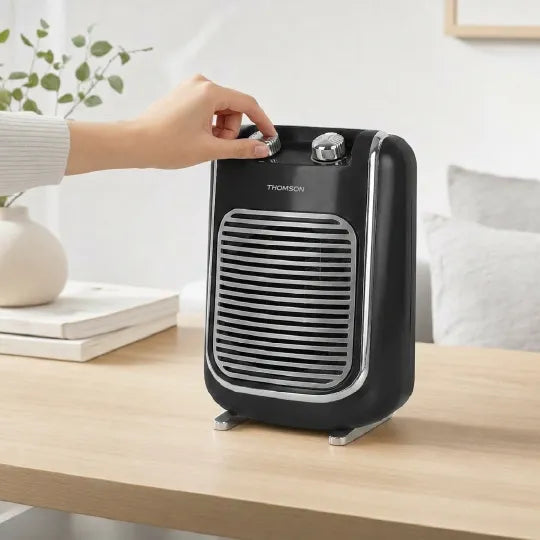
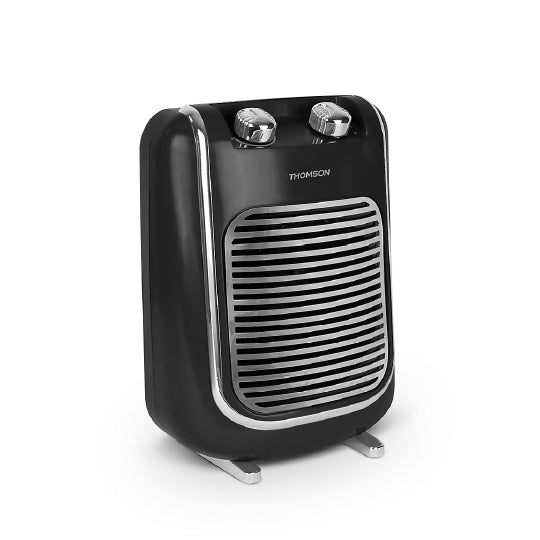
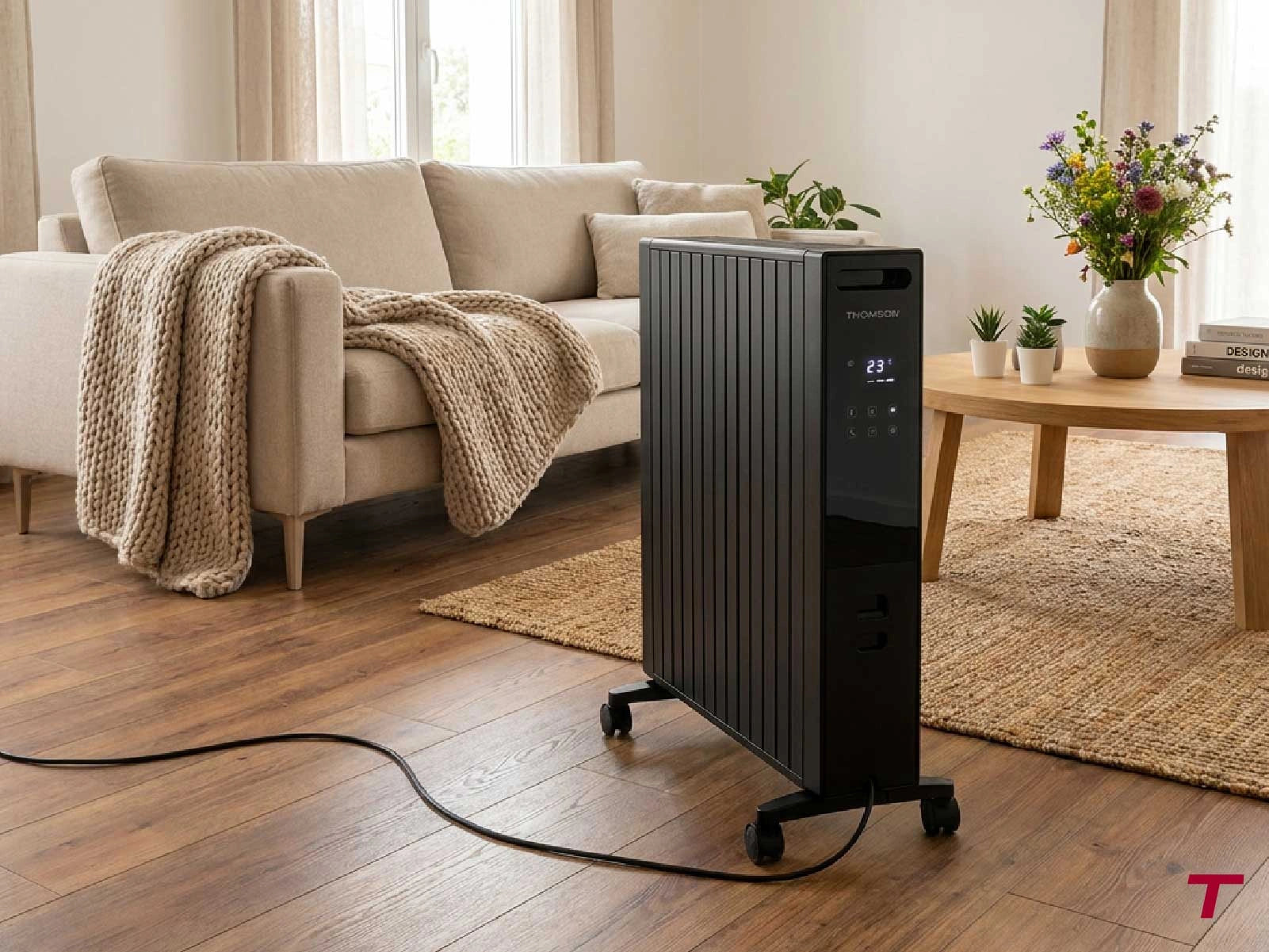
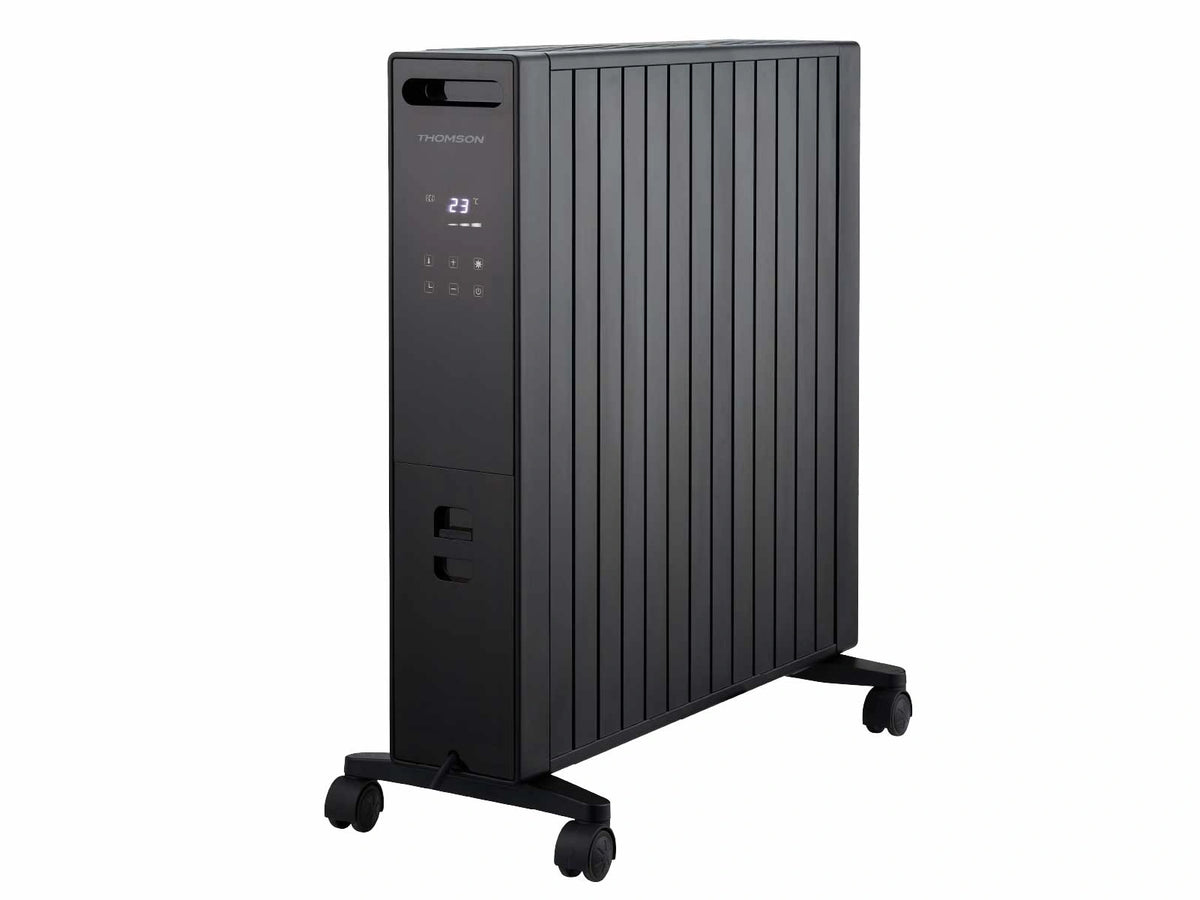
Supplementary electric heater: thermal performance at the heart of every room
A supplementary electric heater can quickly warm a room when the main heating system is not sufficient or when you want to avoid heating the entire home. During the shoulder seasons, on cool evenings or when temperatures temporarily drop, it provides welcome additional warmth in an office, bedroom or living room.
Our range of heaters, along with Thomson heating solutions, offers models designed to combine ease of use, thermal efficiency and controlled energy consumption.
Which supplementary heater should you choose for optimal comfort?
Each technology meets a different need depending on the room to be heated and the desired duration of use. The choice therefore depends mainly on how you plan to use it: whether you need immediate heating for a few minutes or are looking for a pleasant temperature for several hours.
Dry-inertia supplementary heating: the economical choice
The dry-inertia supplementary heater is one of the most appealing solutions for regular use. Depending on the model, its heating core, made from a material such as ceramic or cast iron, stores the heat produced by the heating element before gradually releasing it into the room. A ceramic heater offers a responsive rise in temperature, while a cast-iron heater prioritizes long-lasting heat release. This gradual distribution limits temperature fluctuations and reduces the need for frequent reheating.
Unlike fan heaters, this heater prioritizes a very rapid rise in temperature through the immediate distribution of hot air. It is particularly well suited to occasional needs, for example heating a bathroom before a shower or quickly warming up a workspace. However, once switched off, it does not retain heat and must run continuously to maintain the desired temperature.
Dry-inertia radiators are therefore particularly well suited to users looking for economical heating for regular use. To provide both rapid heating and even heat distribution, the dual-core heating radiator combines a responsive heating film with an inertia core capable of extending heat release.
Fluid-inertia supplementary radiator (oil-filled)
The fluid-inertia supplementary radiator, also known as an oil-filled radiator, works on a simple principle: an electric heating element heats a heat-transfer fluid contained inside the appliance. This liquid stores the heat and then gradually releases it through the radiator's casing, ensuring a consistent distribution of heat throughout the room.
Thanks to its high thermal inertia, the oil-filled radiator continues to release heat even after the heating element is switched off. The temperature therefore remains more stable than with a fan heater, while limiting fluctuations in heat. It is particularly suitable for rooms occupied for several hours at a time, such as a living room, bedroom or office.
In return, it takes longer to heat up than a fan heater or a dual-core heating appliance. It is also larger and heavier because it contains heat-transfer fluid.
How do you calculate the power of your supplementary electric radiator?
A radiator suited to the room's size heats more efficiently and prevents excessive energy consumption.
As a general rule, allow approximately 100 watts per m² in a properly insulated home. These estimates are provided for guidance only and may vary depending on the property's insulation.
Low-consumption heating solutions and energy-efficient electric radiators can then optimise this power through better heat management.
| Room type | Approximate area | Recommended Wattage | Recommended Bestherm technology |
|---|---|---|---|
| Office / Bathroom | 5 to 10 m² | 500W to 1000W | Dry inertia |
| Bedroom | 10 to 15 m² | 1000W to 1500W | Dry or fluid-filled |
| Living room / Studio | 15 to 20 m² | 1500W to 2000W | Fluid-filled |
Maximize your savings with the presence and open-window detector
Portable or fixed auxiliary heaters now incorporate smart features to better adapt their operation to household needs. Combined with a connected electric heater or smart electric heaters, they offer precise temperature regulation to the nearest degree, automatic shutdown when no one is present or a window is open, and remote control from a mobile app.
A heater with an open-window detector detects a sudden drop in temperature caused by ventilation and automatically reduces its Wattage to avoid unnecessary energy consumption. Models equipped with a presence detector, meanwhile, adjust the heating according to the room's actual occupancy. These features make it possible to enjoy more autonomous, comfortable and better-controlled heating every day.
Use, safety and indoor air management
For safe use, the heater must be placed on a stable, unobstructed surface, leaving enough space around the appliance to ensure good air circulation.
Modern models generally feature several safety protections:
- overheat protection;
- tip-over protection for portable appliances;
- precision electronic thermostat;
- automatic shutdown in the event of a fault.
For humid rooms, electric towel rails are a perfectly suitable solution.
The sensation of warmth also depends on the quality of the surrounding air. An appropriate humidity level improves comfort and limits problems associated with air that is too humid. In addition to heating, an air dehumidifier helps maintain an optimal humidity level throughout the year.
FAQ
What is the most economical type of supplementary heater?
For regular use, dry thermal inertia and oil-filled heaters are more economical than fan heaters. They retain heat and limit electricity consumption.
Fan heaters warm up very quickly but must run continuously to maintain the temperature, making them more energy-intensive. For frequent use, dry thermal inertia is generally preferred. Oil-filled heaters nevertheless remain an appealing alternative when gentle heat is desired for several hours.
What power rating should you choose for an electric supplementary heater?
You should generally allow approximately 100 watts per m² in a properly insulated room.
Sizing also depends on insulation, ceiling height and how the room is used. Choosing the right power ensures rapid temperature increases without excessive energy consumption.
Can a supplementary heater be used continuously throughout the winter?
Yes, a high-end supplementary heater can be used regularly, but it is primarily designed to temporarily improve a room's thermal comfort.
To heat an entire home on a daily basis, a fixed heating system generally remains more suitable than a supplementary heater. However, recent models equipped with an intelligent electronic thermostat, personalized programming and presence sensors can still be used frequently while keeping energy consumption under control.
To optimize air circulation and distribute heat more evenly throughout your home, also discover our guide to installing a ceiling fan.