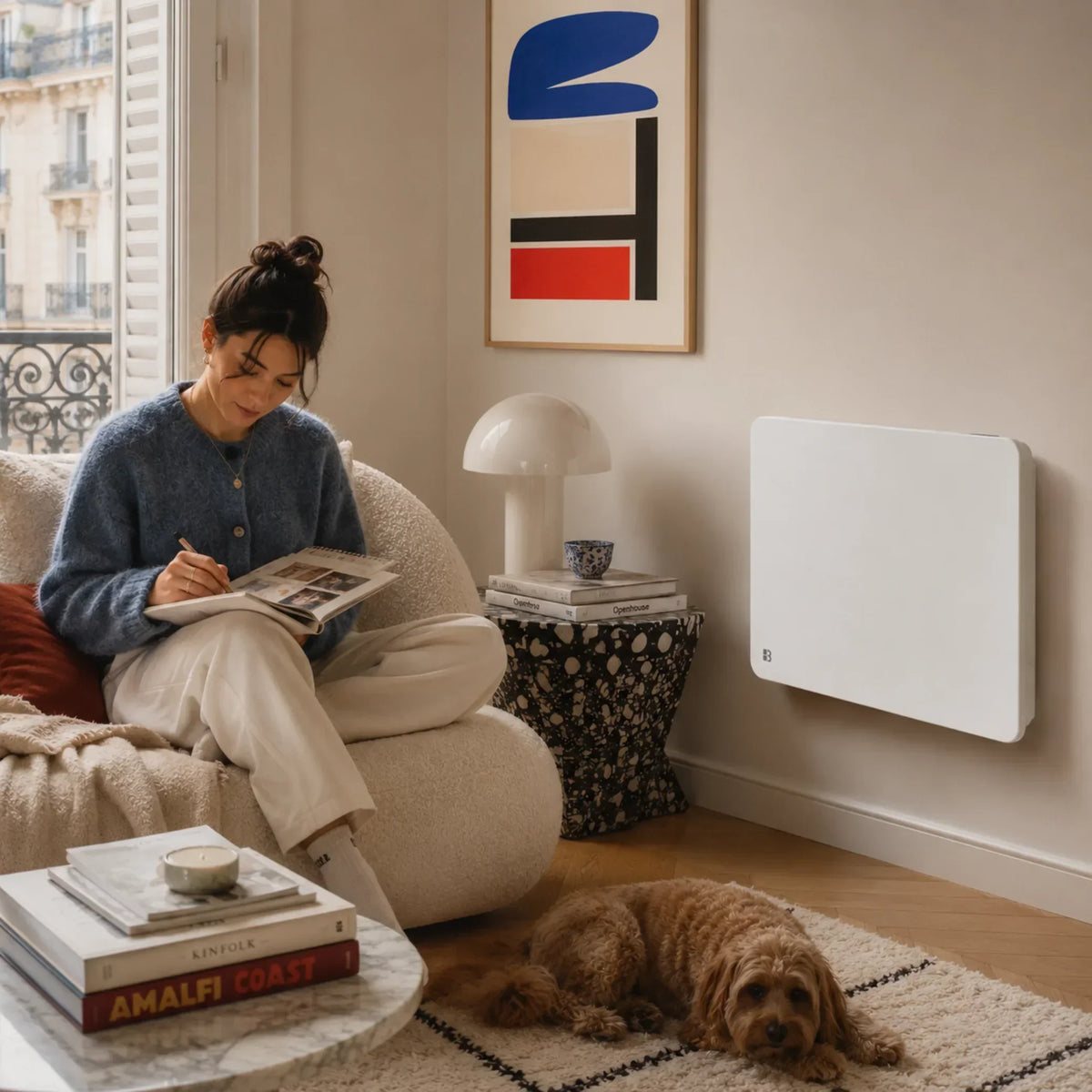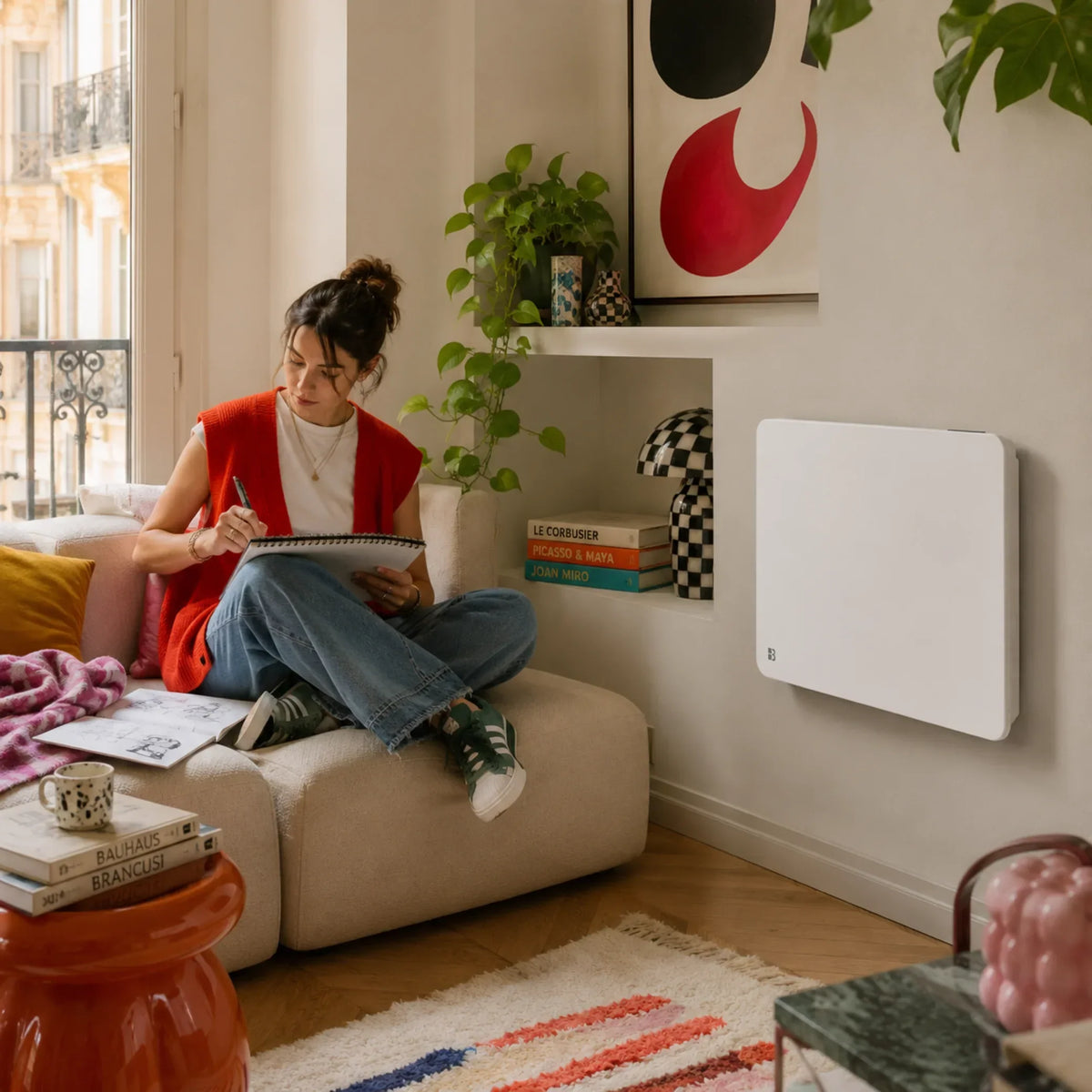
Reducing energy consumption helps lower your bill while limiting your environmental impact. But some actions are much more effective than others. To achieve real savings, it is therefore better to start with the most energy-intensive areas, beginning with heating.
Inertia radiator, connected thermostat, scheduling, and presence detection are just some of the solutions available today to better control your heating without sacrificing comfort. Here are the main ways to better manage your consumption every day.
1. Heating: the largest energy expense to optimize
In a French home, heating generally represents the largest source of energy consumption. According to ADEME, it accounts for around 66% of a home's energy consumption.
If you are looking to reduce your bill, heating is therefore one of the first areas to address.
A few simple habits can already help you better control your consumption:
- set a suitable temperature for each room;
- schedule heating periods;
- reduce heating when the home is unoccupied;
- check the main sources of heat loss;
- keep radiators clear to ensure good heat distribution.
The idea is not to systematically heat less, but rather to adapt heating to your needs and schedule.
To learn more, discover our selection of low-consumption radiators, designed to combine comfort with controlled energy consumption.
2. Replace old convectors with connected inertia radiators
Old electric convectors, sometimes nicknamed “toasters,” heat up quickly but often offer less precise regulation than modern equipment.
An inertia radiator works differently. Its heating element, generally made of ceramic or cast iron, stores heat and then releases it gradually. The heat is therefore distributed more gradually, helping to maintain a more stable temperature in the room.
According to EDF, replacing old electric convectors with inertia radiators can lead to savings of up to 30%**. These savings depend in particular on the characteristics of the home, the equipment selected, and heating habits.
A more precise thermostat to prevent overheating
Electronic regulation provides better control of the set temperature. In particular, it prevents the home from being unnecessarily overheated and makes it easier to program the heating.
This allows you to adapt the heating to each room's use, according to occupancy times and the desired level of comfort.
Conventional radiator or inertia radiator?
| Equipment | Temperature regulation | Heat distribution | Absence management |
| Mechanical convection heater | Less precise adjustment | Heat dissipated quickly | Manual |
| Inertia radiator | Adjustable in 0.5°C increments | Gradually distributed heat | Automatic, depending on the model's features |
To discover suitable solutions for controlled energy consumption, see our selection of energy-efficient, high-performance electric radiators.
3. Simple steps to reduce your heating consumption
Changing your heating system is not the only solution. A few simple habits can also make a difference every day.
Set the right temperature
ADEME generally recommends 19°C in living areas when occupied and 17°C in bedrooms, especially at night. Lowering the set temperature by 1°C saves an average of 7% on heating energy.***
Close the shutters and curtains in the evening
As soon as night falls, closing the shutters and curtains helps limit heat exchange with the outdoors. During the day, make the most of the sun's heat whenever possible.
Ventilate your home effectively
Ventilating your home remains essential for renewing indoor air. Open the windows wide for 5 to 10 minutes and temporarily turn off the heating during this time.
Discover our models equipped with an open-window detector to complement your energy-saving strategy.
Do not obstruct radiators
Avoid placing a bulky piece of furniture in front of a radiator or drying laundry on it, unless the appliance is designed for this purpose. An unobstructed radiator distributes its heat more effectively throughout the room.
The most important thing is therefore to avoid heating unnecessarily, rather than simply trying to lower the temperature.
4. The importance of regulation and home automation
With a weekly schedule, you can set a comfortable temperature in the morning and evening, then automatically reduce the heating during periods when the home is empty.
This way, you return to a comfortable home without having left the radiators running unnecessarily all day.
A smart thermostat goes even further by allowing you to control your heating from a smartphone, depending on the features offered by the equipment.
With a smart thermostat, you can:
- schedule heating periods according to your routine;
- automatically lower the temperature when you are away;
- adjust the set temperature remotely from your smartphone;
- monitor your consumption in real time, depending on the model.
This allows you to heat more when you are home and automatically lower the temperature when you are away.
To find out when to turn your heating back on as temperatures start to fall, also consult our guide on when to turn on your heating in autumn.
5. Insulation and maintenance: good habits for limiting heat loss
Even the best radiator cannot sustainably compensate for poor insulation. Before investing in new equipment, it is therefore worth identifying the main sources of heat loss in the home.
Windows and doors can let cold air in, particularly when their seals are worn or their airtightness is inadequate. In a poorly insulated home, the loft, walls and floors should also be checked.
To limit heat loss, start by checking:
- the condition of the seals around the windows and doors;
- loft insulation;
- the insulation of the walls and floors;
- any possible sources of cold air;
- the space around the radiators.
The aim is to retain heat in the home so you do not have to overheat it to compensate for heat loss.
Maintain your radiators regularly
Dust can accumulate on certain surfaces and grilles of radiators. Regular dusting helps keep the appliance clean and unobstructed.
Also remember not to place obstacles in front of radiators and to check regularly that they are working properly.
A comprehensive approach to reducing your bill
To achieve lasting savings, the most effective approach is to combine several measures: an appropriate temperature, good insulation, effective regulation, and heating habits suited to your lifestyle.
FAQ: frequently asked questions about saving energy at home
What temperature should you set in your home to save energy?
To save energy, ADEME recommends 19°C in occupied living areas and 17°C in bedrooms.
According to ADEME, lowering the set temperature by 1°C saves an average of 7% on heating. Adjusting the temperature to match occupancy periods therefore helps limit consumption while maintaining good thermal comfort.
How much can you save by replacing your electric radiators?
Replacing old convector heaters with properly regulated inertia radiators can save up to 30% in energy.
However, the level of savings varies depending on the home, the quality of the regulation, and heating habits.
Which appliance consumes the most energy in a home?
According to ADEME, heating is the largest source of energy consumption in a home. It accounts for around 66% of energy consumption.
It is therefore one of the first areas to optimize to reduce your consumption sustainably.
How can you reduce your electricity bill without compromising comfort?
The simplest approach is to start with heating: adjust temperatures, schedule heating periods, and avoid heating unoccupied rooms.
Inertia radiators combined with precise regulation and scheduling also make it possible to better control consumption without sacrificing comfort.
Can a connected radiator really save money?
Yes, if it is used correctly. A connected radiator allows you to program temperatures, manage periods when you are away, and adjust the heating remotely.
The main goal is to limit unnecessary heating periods while maintaining a comfortable temperature when you are at home.
* https://batizoom.ademe.fr/indicateurs/consommation-surfacique-des-batiments-residentiels-par-usage
** https://particulier.edf.fr/fr/accueil/economies-energie/chauffage.html