Choosing a heating system is not just about comparing energy prices. The cost of an installation also depends on its purchase, setup, maintenance, and day-to-day energy consumption. A more expensive solution to purchase may therefore be worthwhile in use, while equipment with a low upfront cost may require more work or maintenance.
So, which heating system should you choose for a house or apartment? An electric inertia radiator, heat pump, gas boiler, or wood-burning stove: each solution meets different needs.
1. Overview of the different heating systems: strengths and limitations
To begin, let's compare the main systems based on their cost, installation, and comfort.
| Heating system | Installation cost | Maintenance | Installation complexity | Comfort |
|---|---|---|---|---|
| Electric inertia radiator | Low to moderate | No mandatory maintenance contract | Very simple | Even heat and precise control |
| Air-to-water heat pump | High, often several thousand euros | Maintenance regulated depending on the installation | Major work | High |
| Condensing gas boiler | High | Annual maintenance mandatory | Hydronic network and exhaust system required | High |
| Wood-burning or pellet stove | Moderate to high | Maintenance and chimney sweeping | Flue installation required | Comfortable heat, but more localized |
Electric inertia radiator
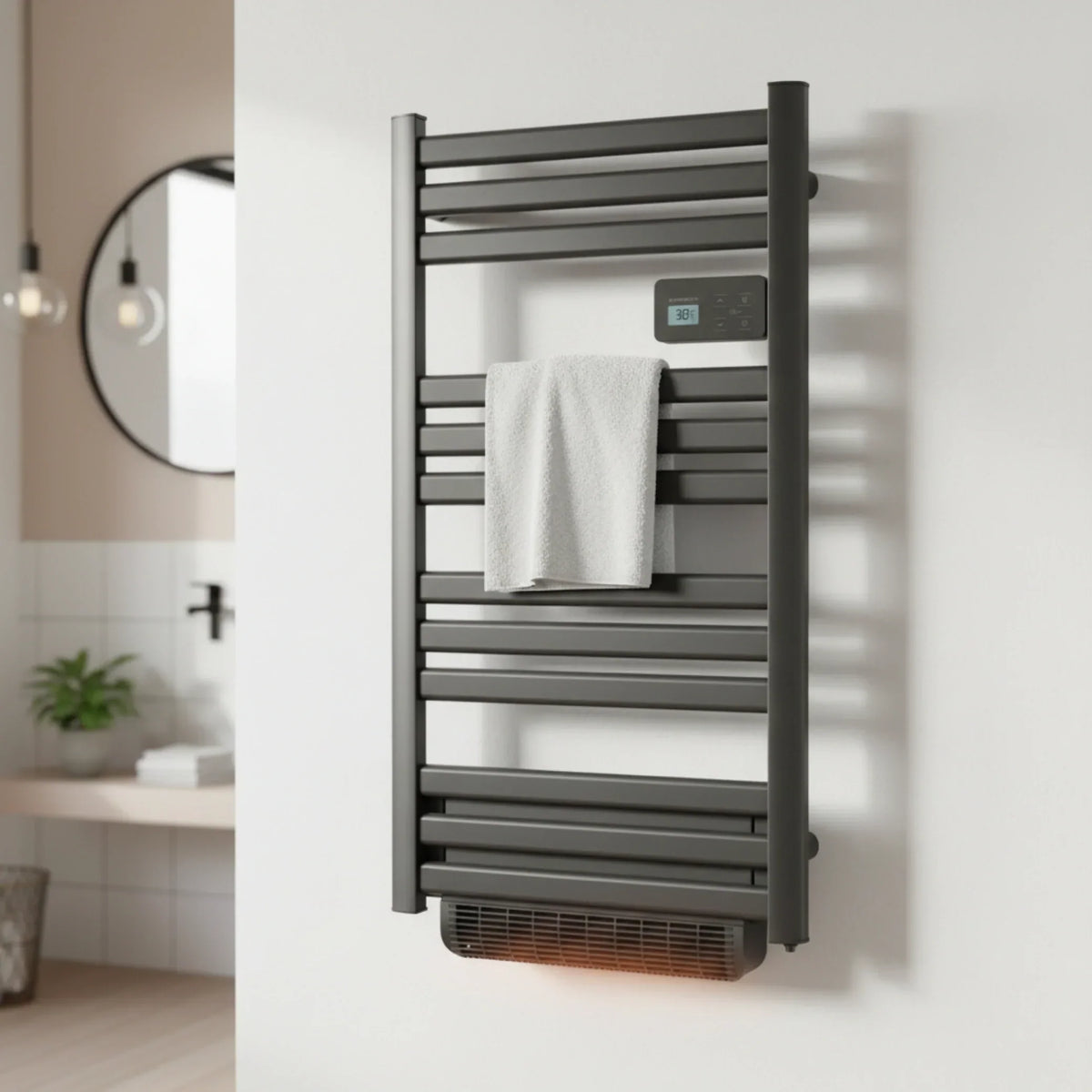
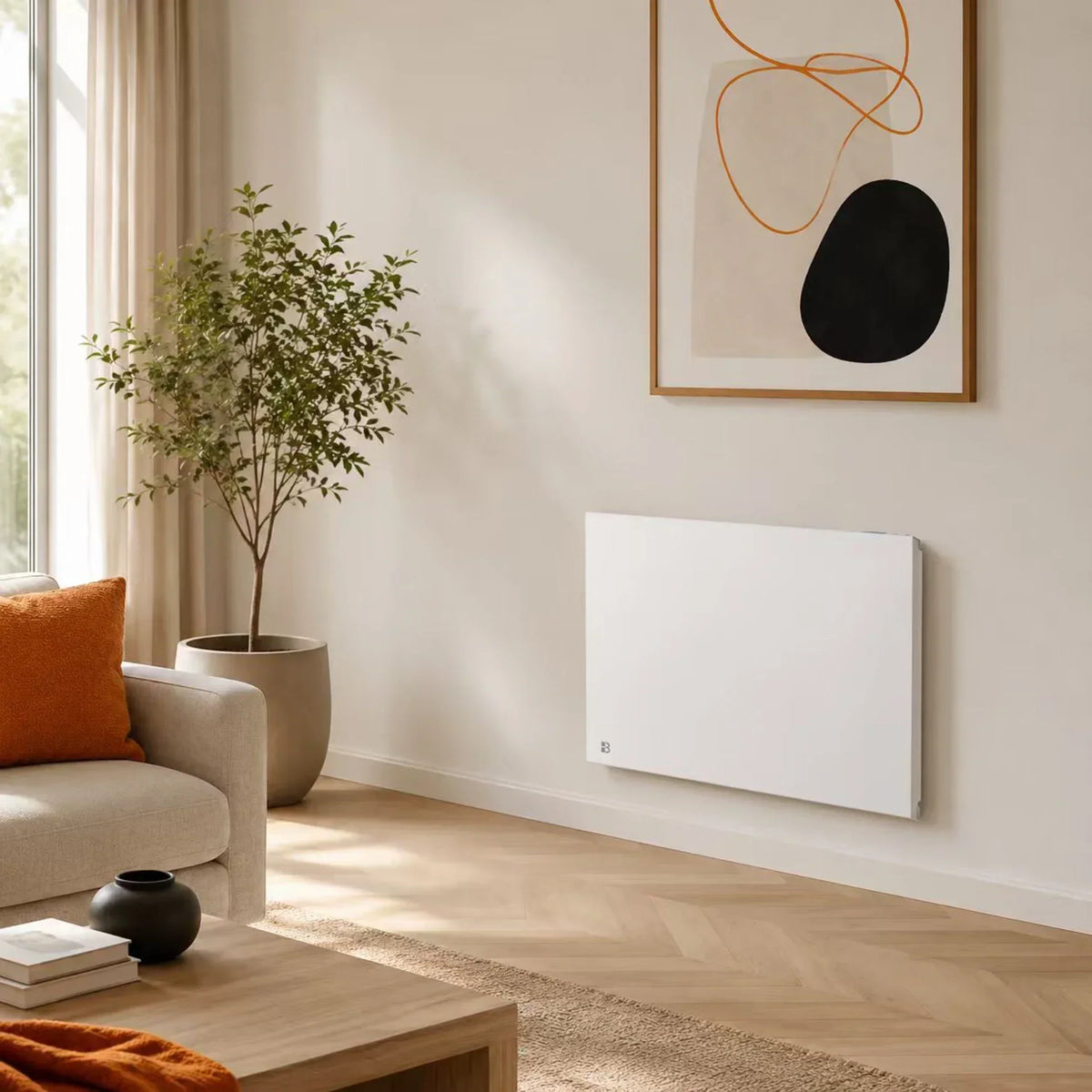
The electric inertia radiator directly converts electricity into heat and gradually distributes it through its heating body. It requires neither a boiler, nor a water circuit, nor an outdoor unit.
Its main advantage? Simplicity. There is no need to create a water network or install an outdoor unit: if the home already has a suitable electrical installation, the radiator is mounted on the wall and connected directly. Connected models also allow the temperature and heating periods to be adjusted remotely according to your needs.
Air-to-water heat pump
The heat pump uses the heat present in the outdoor air to heat the home through a water circuit. It can be particularly worthwhile in a well-insulated house that already has a hydronic heating system.
However, its installation is more complex and its initial cost is generally higher than that of electric radiators. It notably requires an outdoor unit and must be correctly sized.
Condensing gas boiler
A gas boiler can provide heating for a home fitted with a network of water radiators. It offers centralized operation and a good level of comfort.
However, it requires a hydraulic network, a gas supply and suitable exhaust ventilation. In addition, the boilers concerned require mandatory annual servicing.
The wood-burning or pellet stove
Wood is another heating option, particularly for detached houses. A pellet stove offers automated fuel feeding, while a wood-burning stove relies on more manual operation.
In both cases, you need to plan for fuel storage, flue-gas removal, as well as servicing and chimney sweeping.
2. Which heating should you choose for your type of home?
The choice also depends on your home: its insulation, floor area and existing equipment.
- Apartment or small space: electric heating with dry thermal inertia is particularly suitable when available space is limited. It requires no utility room, hydraulic network or outdoor unit. Its installation also preserves a degree of flexibility in how the rooms are arranged. To learn more, discover our tips for heating small spaces efficiently.
- Home undergoing renovation: connected electric radiators can enable room-by-room renovations when the property has a suitable electrical installation. In particular, they eliminate the need to install a pipe network to supply water radiators. This approach can be worthwhile when the aim is to limit the extent of the work.
- New or very well-insulated home (BBC, RE2020)*: when heating needs are reduced, a properly sized electric heating solution can provide precise, responsive regulation. In all cases, the power output should be suited to the floor area, insulation and characteristics of each room.
For specific rooms, such as a child’s bedroom, temperature and programming needs may also differ. See our guide to choosing heating for a child’s bedroom.
3. Why modern electric heating stands out
Electric heating was long associated with old-style convectors, often criticized for their imprecise operation and limited comfort. Today’s equipment offers more possibilities.
The main advantage is still the ease of installation. An electric radiator does not require a boiler, a water circuit or an outdoor unit. A wall mount and a suitable electrical connection are all that is needed.
Another advantage is that there is no fuel to store and no radiator-specific maintenance contract. However, the electrical installation must be kept in good condition and be suitable for the equipment installed.
With a connected model, the heating can also be controlled from a smartphone. You can schedule operating times, adjust the temperature or manage several rooms without having to adjust each radiator directly.
This programming can help limit unnecessary energy consumption by adapting heating to the home's occupancy patterns.
Finally, today’s radiators are available in a variety of formats and finishes, making it easier to integrate heating into the home.
Discover the complete range of Bestherm electric radiators.
4. Total cost analysis: purchase, installation and use over 10 years
To compare two heating systems, looking only at the energy bill is not enough. The total cost must be taken into account.
Let’s take the example of a home requiring several heating units. A heat pump installation may represent an initial investment of several thousand euros, to which the work required for its installation and maintenance costs may be added.
Conversely, electric inertia radiators generally require a much lower initial investment, and installation is less complex when the electrical system is suitable.
The calculation must then factor in energy costs over several years. A properly sized heat pump may use less electricity than direct electric heating thanks to its coefficient of performance. However, this operating advantage must be weighed against the additional cost of purchase, installation and maintenance.
So, which system is actually the least expensive? It is impossible to answer without considering the property as a whole. Over 10 years, you need to add up the cost of the equipment, installation, maintenance, and energy consumption. A heat pump may be more efficient in use, but its initial investment is also much higher. Conversely, electric radiators require little work and make it possible to keep the budget under control from the outset.
In a well-insulated home, or when renovating without an existing central heating system, an electric thermal-inertia radiator can therefore offer a particularly attractive overall cost, especially thanks to its straightforward installation.
If your home already has a water-based heating system, however, a heat pump is worth considering. In this case, carefully compare the installation cost with the energy savings expected over several years.
For some projects, low-temperature radiators with thermal inertia may also be worth considering: discover our selection of low-temperature radiators.
5. Key criteria for confirming your heating decision
Before making your choice, simply ask yourself these few questions:
- Property insulation: good insulation reduces heating needs and improves comfort, regardless of the technology chosen.
- Immediately available budget: compare the price of the equipment and installation, as well as any potential maintenance costs.
- Existing installation: whether there is a water-based heating system, an electrical installation, an exhaust flue, or space available for an outdoor unit.
- Room size and layout: the required output must be determined based on the characteristics of the property.
- Desired level of control: scheduling, a mobile app, and room-by-room management can make it easier to control your heating.
- Cost over time: consider several years to include purchase, installation, maintenance, and energy costs.
So, which heating system should you choose? The right choice mainly depends on your home, your budget, and the scope of the planned work. For a renovation without an existing central heating system, an electric inertia radiator has a clear advantage: it is simple to install, easy to control, and requires few day-to-day constraints.
FAQ: Frequently asked questions about choosing a heating system
What is the simplest heating system to install during renovation?
Electric inertia heating is one of the simplest solutions to install during renovation. It requires neither a pipe network, nor a boiler, nor an outdoor unit: when the electrical installation is suitable, wall mounting and an electrical connection are all that is needed.
What is the most economical heating method in the long term?
There is no single answer for every home. In terms of overall cost, an electric inertia radiator can be particularly advantageous when taking into account the purchase price, installation, and lack of specific maintenance requirements. A heat pump may be more efficient in use in some configurations, but its initial investment is generally higher.
Is a maintenance contract mandatory for electric radiators?
No. Electric radiators are not subject to a mandatory annual maintenance contract like gas boilers covered by this requirement. However, they do require routine maintenance and an inspection of the electrical installation to ensure proper operation and safety.
How do you choose the output of an electric radiator?
The required output depends in particular on the room's floor area, insulation, location, ceiling height, and exposure. It is preferable to base your choice on the home's actual characteristics rather than applying the same output to every room.
Can connected heating really reduce energy consumption?
Connected heating does not produce more heat with less electricity at the same power output. Its main benefit lies in programming and regulation: it allows heating periods and temperatures to be adjusted to the actual occupancy of the home and avoids heating unnecessarily.
* https://www.ecologie.gouv.fr/politiques-publiques/labels-batiment-basse-consommation-renovation