Heating a studio, small apartment or small home mainly requires finding the right balance between comfort, energy consumption and available space. In a small space, the choice of radiator, its power and its position directly affect everyday comfort.
A dry-inertia electric radiator can be perfectly suitable for a studio, small apartment or small home. However, you need to choose a power rating suited to the room, take its insulation into account and use the control functions to avoid heating unnecessarily.
Which heating should you choose for a studio or small apartment?
The choice of heating depends on the layout of the home, the available space and the intended use. In a small space, the appliance’s size can be just as important as its power.
The mobile dry- or fluid-inertia radiator
Easy to move, the mobile dry-inertia radiator can be an interesting solution for heating a room or area of the home occasionally. Models with dry or fluid inertia are available, offering more even heat than a simple fan heater.
In a studio or small apartment, this flexibility can be useful when needs change throughout the day. For example, you can mainly heat the living area during the day, then move the radiator to another area if necessary.
As with any electric heating, consumption depends on the appliance’s power and how long it operates. It is therefore preferable not to leave a room heating unnecessarily when it is unoccupied.
The fixed dry-inertia radiator
For heating used every day, a fixed dry-inertia radiator offers a good balance between thermal comfort and integration into the room.
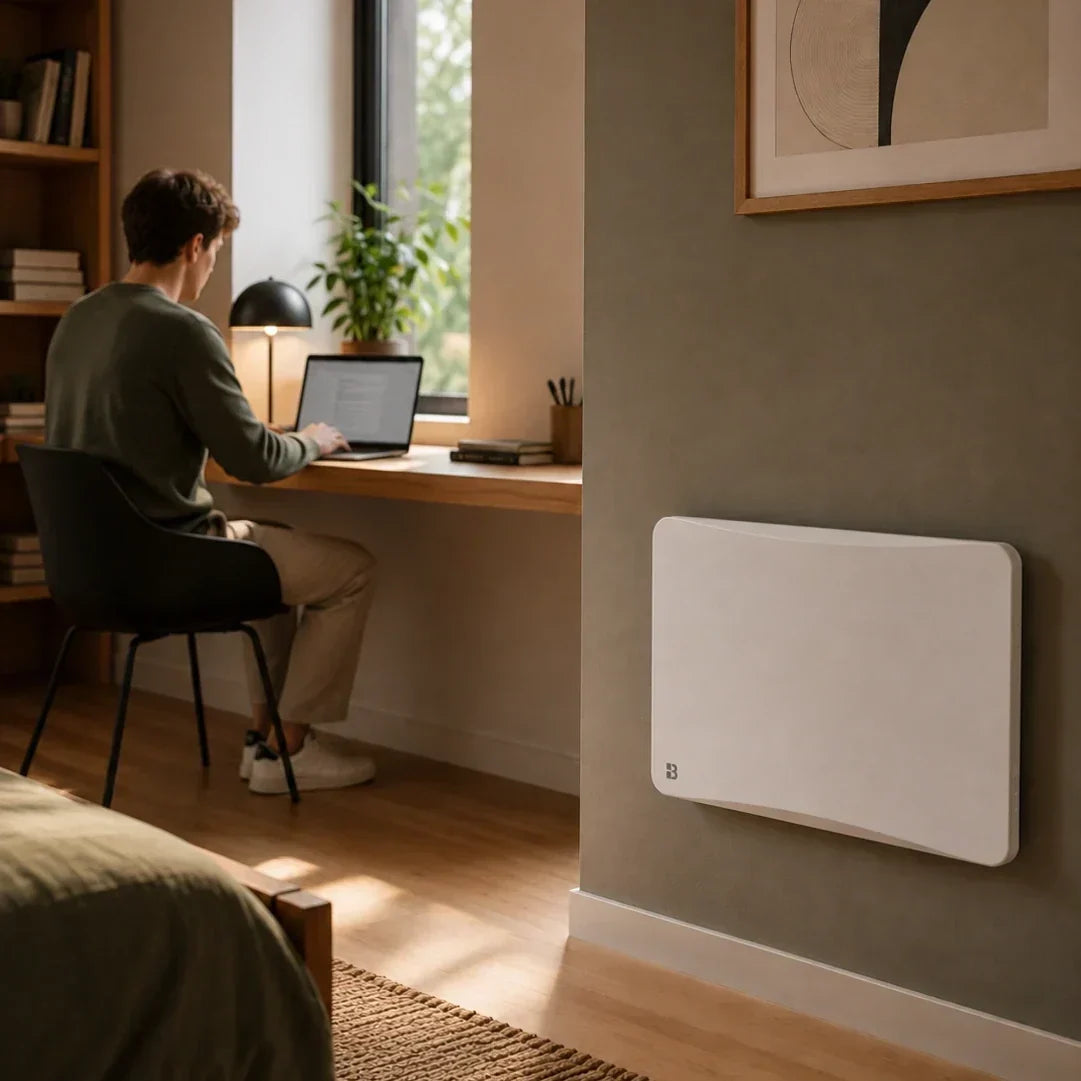
In a small space, the radiator’s size matters too. When every wall is already occupied, saving space quickly becomes a real concern. A vertical model can be particularly useful when the available wall width is limited, as it makes use of the height. Skirting-board models can, for their part, fit into certain layouts where wall space is limited.
Another advantage over a portable radiator is that fixed models may offer weekly scheduling. This makes it possible to define heating periods in advance according to the home's habits: comfort temperature in the morning and evening, reduced temperature during the day or at night, for example. Once the program has been saved, the radiator automatically adjusts its operation without requiring daily intervention.
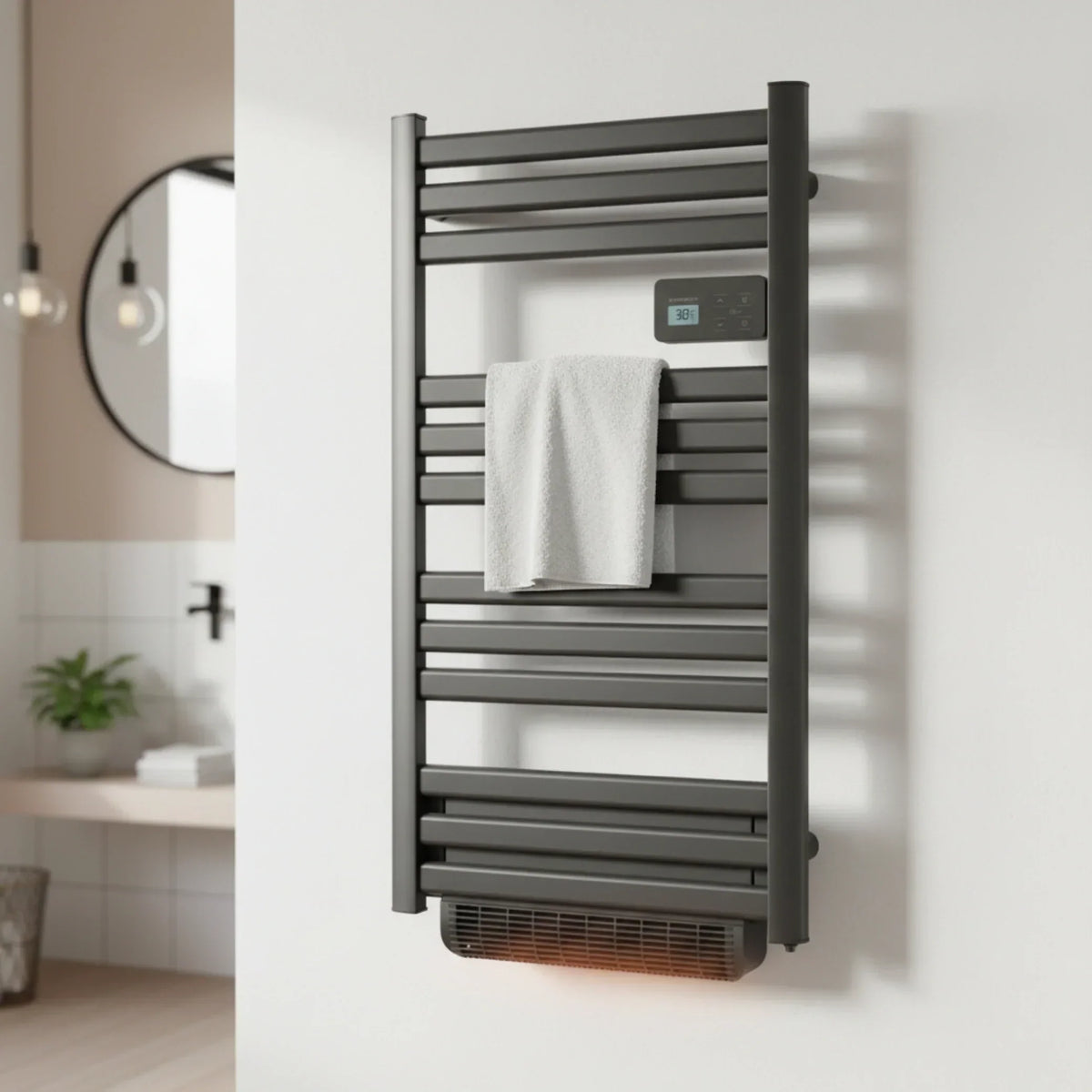
In a small bathroom, a compact heated towel rail can also be a suitable solution when heating needs are limited. It heats the room while retaining the practical function of a towel rail.
Smart features
Beyond scheduling, certain features can make heating management even easier, including remote control and open-window detection.
A connected electric radiator lets you control the heating from an app, even when you are away from home. You can check the temperature, adjust the setting, adapt heating periods to your needs and, depending on the model, monitor your consumption in real time.
This is particularly practical in a studio apartment, small flat or small home: if you get home earlier than expected, you can remotely bring the heating back up to temperature. Conversely, if you forgot to turn down the heating when leaving, you can adjust the setting directly from your smartphone.
Some fixed radiators also feature open-window detection. When a sudden drop in temperature is detected, the radiator stops heating to avoid unnecessary heating while airing the room.
What radiator wattage is suitable for a studio apartment or small home?
Adjusting wattage to floor area
Floor area is the first reference point for estimating the required wattage. As a general guideline, allow approximately 80 to 100 W per m² in a home that is adequately or very well insulated. In a recent building meeting BBC or RE2020* requirements, requirements may be lower.
| Area | Insulation level | Indicative wattage |
|---|---|---|
| 10 m² | Adequately to very well insulated | 800 to 1,000 W |
| 15 m² | Adequately to very well insulated | 1,200 to 1,500 W |
| 20 m² | Adequately to very well insulated | 1,600 to 2,000 W |
| 10 m² | Low to moderate insulation | 1,000 to 1,500 W |
| 15 m² | Low to moderate insulation | 1,500 to 2,000 W |
| 20 m² | Low to moderate insulation | 2 000 to 2 500 W |
This value may nevertheless vary depending on exposure, ceiling height, windows and heat loss. For a larger area, the total power can be distributed among several radiators to distribute heat more effectively throughout the home.
For more information and to refine your estimate, see our article dedicated to choosing the power of an electric radiator.
Take the home's insulation into account
Two small homes with the same floor area may nevertheless have very different requirements.
Several criteria must therefore be taken into account:
- Insulation : a recent, well-insulated home requires less power.
- Windows : the type of glazing and the quality of the window frames affect heat loss.
- Ceiling height: the greater the volume to be heated, the more the required power may increase.
- Exposure : a north-facing room may have different heating needs from a room that receives plenty of sunlight.
-
The home's location: an apartment surrounded by heated homes may have less heat loss than a home on the ground floor or beneath the roof.
How can you reduce your heating consumption?
The radiator is not the only factor to consider when managing energy consumption. Settings, programming and daily habits also play an important role.
Set and program the temperature
Adjusting the temperature to periods of occupancy helps avoid heating unnecessarily when the home is empty.
Each additional degree increases heating consumption. ADEME** recommends maintaining a temperature of 19 °C in living areas, and 17 °C at night or when you are away.
A few simple habits can make a difference:
- program a comfortable temperature during periods of occupancy;
- reduce the heating when you are away and at night;
- adjust the temperature according to the room;
- Also avoid setting the thermostat much higher to speed up the rise in temperature. The radiator will simply run longer to reach the requested temperature.
Limit heat loss
The better a home retains heat, the less the heating system needs to operate to maintain the desired temperature.
Windows and doors in particular should be checked. Worn seals, poorly sealed windows or drafts can quickly cool a room and increase heating requirements.
When airing the room, open the windows wide for a few minutes, then close them again. This renews the air without allowing the room to cool down for too long.
An open-window detection feature can also be useful: when the radiator detects a sudden drop in temperature, it stops heating to avoid unnecessary energy consumption.
FAQ - Heating a studio apartment or small home
Which heating should you choose for a studio apartment?
An electric radiator is a suitable solution for everyday heating in a studio apartment, small apartment or small home, provided you choose a power rating suited to the room and its insulation.
A vertical, skirting-board or compact model may be a good option when space is limited. For occasional use or when flexibility is important, a portable dry-inertia or fluid-inertia radiator may also be suitable. In a small bathroom, a compact towel radiator can heat the room while drying towels.
What radiator power rating is suitable for a studio apartment?
For a properly or very well-insulated home, allow approximately 80 to 100 W per m².
For a 20 m² small home, this amounts to approximately 1,600 to 2,000 W. The power rating should then be adjusted according to the insulation, windows, ceiling height and heat loss.
How can you reduce heating consumption in a small home?
To reduce energy consumption, it is advisable to schedule heating according to occupancy periods, maintain a suitable temperature and limit heat loss.
A programmable or connected thermostat makes these adjustments easier by automatically adapting the temperature to the household’s habits. For example, you can maintain a comfortable temperature when you are home, then reduce the heating at night or while you are away.
Is a connected radiator useful in a studio apartment?
Yes. A connected radiator lets you schedule heating, adjust the temperature remotely and, depending on the model, monitor your energy consumption.
In a studio apartment, these features are particularly useful for adapting heating to your lifestyle. For example, you can schedule heating periods around your routine, lower the temperature while you are away, or adjust the settings from your smartphone if your schedule changes.
* https://www.ecologie.gouv.fr/politiques-publiques/labels-batiment-basse-consommation-renovation