Dry-inertia electric radiator: everything you need to know before choosing one
For a long time, electric heating had a poor reputation, often associated with high consumption and uneven comfort. However, technologies have evolved considerably. Today, choosing a high-performance electric radiator lets you enjoy more even heat, a stable temperature, and better control over energy consumption.
Whether you are replacing an old appliance, fitting out a renovation, or improving a room’s comfort, choosing the right radiator depends above all on your home, its insulation, and your lifestyle.
Why choose a dry-inertia electric radiator?
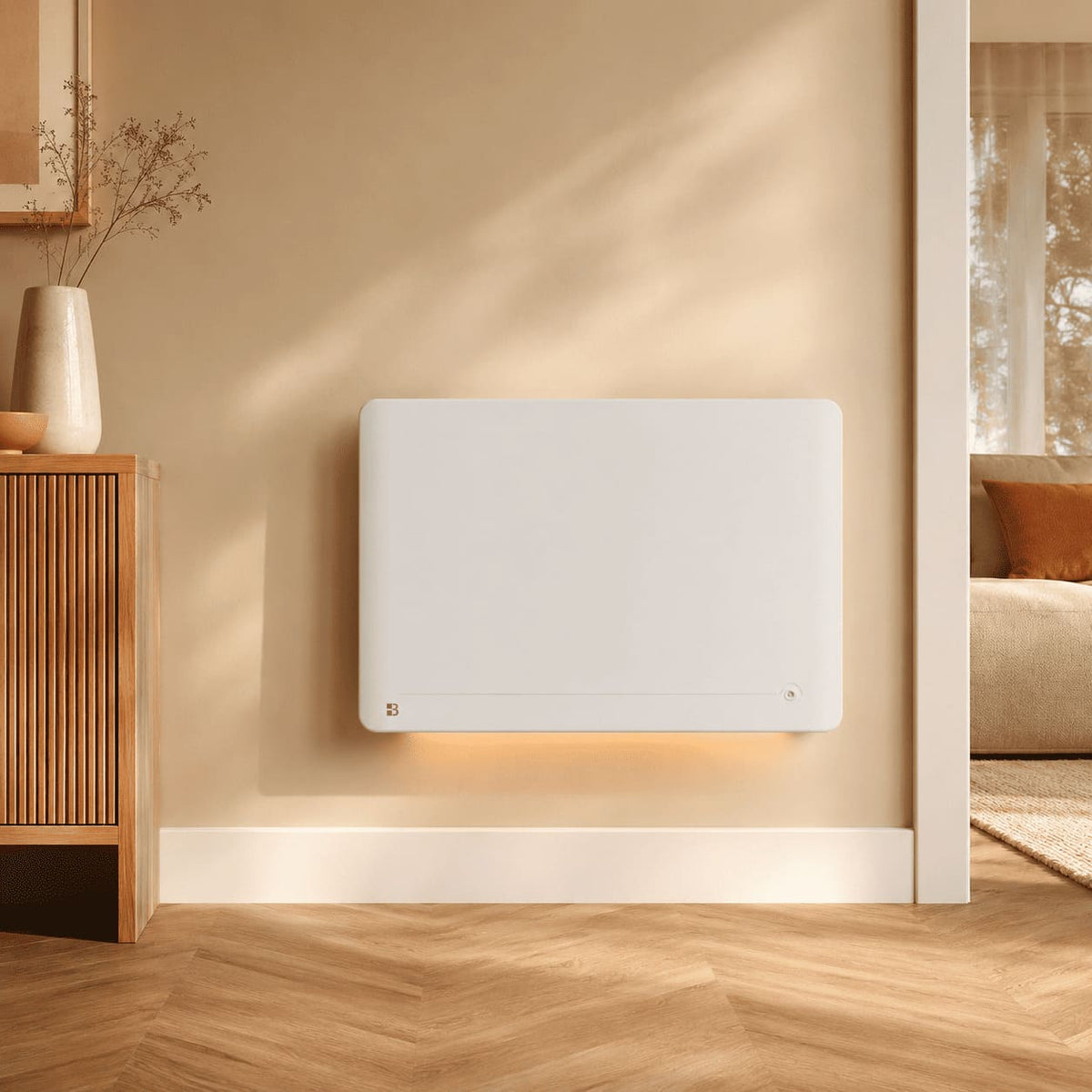
A dry-inertia radiator works on a simple principle: storing heat in a solid material so that it can be gradually released. This technology provides greater comfort than older convection heaters, which mainly heated the air without retaining the heat.
The main advantages are:
- Gentle, even heat that remains pleasant even after the heating element switches off
- A more even temperature thanks to thermal inertia
- Natural heat distribution through thermal radiation
- Better-controlled consumption thanks to suitable regulation
- Less dry air than with some fan-heating systems
To reduce your energy costs even further, it may be a good idea to choose an energy-efficient electric radiator. Low-consumption electric radiators are designed to maintain comfort while limiting unnecessary heating cycles.
How does a dry-inertia radiator work?
The principle is simple: converting electricity into heat, storing it in a solid material, and then gradually releasing it into the room.

The electric heating element heats the heating core, made, for example, of ceramic or cast iron. The heating core then acts as a heat reserve: it stores the energy produced and continues to release gentle heat after the heating element switches off.
This thermal inertia limits sudden temperature fluctuations and lets you enjoy gentle, even warmth while improving control over energy consumption.
Which technologies should you choose for a high-performance dry thermal-inertia radiator?
The choice of technology directly affects heating comfort, heat-storage capacity and the way warmth is distributed throughout your home.
Depending on how the room is used and your expectations, several solutions are available: dry ceramic thermal inertia, dry cast-iron thermal inertia, dual heating core or connected models.
Dry ceramic thermal inertia
The ceramic thermal-inertia technology is appealing for its excellent balance between heating speed and gradual heat release. For those seeking faster heating, ceramic + heating film thermal inertia combines the responsiveness of a heating film with the performance of a ceramic heating core, offering an excellent balance between immediate comfort and lasting warmth.
The cast-iron heating core
Highly valued in living areas, radiators with a cast-iron core offer excellent heat-storage capacity. If you want to speed up heating while maintaining high thermal inertia, cast iron + heating film models are a particularly high-performance solution.
The dual heating core
To combine responsiveness with lasting comfort, a dual-core heating radiator combines several heat-diffusion technologies to quickly achieve a pleasant temperature without giving up the benefits of thermal inertia.
The Thomson range of thermal comfort solutions
Bestherm also offers the range of Thomson heating solutions, combining high-performance materials, modern design and smart features to meet the needs of today’s homes.
How can you optimize the consumption of your dry-inertia radiator?
Even a high-performance radiator will deliver better results with proper regulation. Scheduling and smart features allow you to adapt the heating to your daily routine.
Choosing a smart radiator allows the heating to be automatically adjusted to the occupants' lifestyle habits. Models equipped with an interchangeable electronic thermostat offer even more precise regulation and make it easier to upgrade the system.
Humidity also plays an important role in thermal comfort. Air that is too humid creates a feeling of cold and may encourage you to raise the heating temperature unnecessarily. According to ADEME*, maintaining a humidity level between 40% and 60% improves comfort while limiting energy consumption.
If your home is prone to humidity, using an air dehumidifier can be an excellent complement to your heating system. To find out which appliance to choose based on your home's size and humidity level, see our guide to choosing your dehumidifier.
Smart technologies
Connected electric radiators now make it easy to manage your heating thanks to Wi-Fi and mobile apps.
Depending on the models, these features allow you to:
- Remote heating control
- Consumption monitoring
- Adjusting the temperature according to lifestyle habits
- Better management of consumption in kWh
In everyday use, a connected radiator mainly allows you to heat only when necessary. From a mobile app, you can adjust the temperature, modify a schedule, or check its usage.
Electronic thermostat and weekly scheduling
A precision electronic thermostat provides more reliable temperature regulation.
Combined with a weekly schedule, it allows you to define suitable heating periods:
- Comfort temperature when the room is occupied
- Reducing heating during absences
- Maintaining a minimum temperature during periods of non-use
Models equipped with a pilot wire can also be integrated into centralized heating management.
Presence detector and open-window sensor
Certain features help avoid unnecessary heating periods.
Energy savings are also enhanced by radiators with a presence detector, which can automatically adjust heating according to room occupancy.
In addition, radiators equipped with an open-window detector temporarily suspends heating when a sudden drop in temperature is detected.
These technologies improve energy efficiency and contribute to daily energy savings.
Which technology and power rating should you choose for your dry-inertia electric radiator?
Choosing the right technology and power rating is essential to fully benefit from the performance of a dry-inertia electric radiator. An undersized appliance will struggle to maintain a comfortable temperature, while an oversized model may result in unnecessary energy consumption.
The goal is to find the right balance between thermal comfort, responsiveness, and energy savings.
Choosing the right technology
| Technology | Recommended use | Advantages |
|---|---|---|
| Ceramic | Rooms used daily | Good thermal inertia and even heat distribution |
| Cast iron | Living room, lounge | High heat storage capacity and long-lasting heat release |
| Ceramic + heating film | Studios and multipurpose rooms | Fast heating and thermal comfort |
| Cast iron + heating film | Large spaces | Fast heating and high thermal inertia |
| Wi-Fi connected | The whole home | Remote control |
| PIR presence detector | Irregularly occupied rooms | Automatic heating management |
Choosing the right heating power
Choosing the right power rating is essential to ensure efficient heating without excessive energy consumption. As a general rule, it is recommended to allow for around 100 W per m² in a properly insulated home. For newer homes offering excellent energy performance, such as BBC** buildings or those compliant with RE2020***, requirements are generally lower, ranging from 60 to 80 W per m².
These values are indicative only. The ideal power rating also depends on several factors, such as ceiling height, the room’s exposure, the quality of the insulation, windows and doors, and the region where your home is located. If in doubt, we recommend seeking personalized advice to select a radiator perfectly sized for your needs.
FAQ: Everything you need to know about dry-inertia electric radiators
How long does a dry-inertia radiator last?
A dry-inertia radiator is designed to last for several years thanks to its robust construction and the absence of heat-transfer fluid.
The materials used, such as ceramic or cast iron, offer excellent long-term resistance and help maintain good heating performance.
Does a dry-inertia radiator use less energy than a conventional radiator?
A dry-inertia radiator provides better control over consumption through its principle of thermal storage and gradual heat release.
Combined with precise regulation, weekly scheduling and smart features, it helps optimize electricity consumption on a daily basis.
Which material should you choose: ceramic or cast iron?
The choice mainly depends on how the room is used and the level of comfort desired.
Ceramic provides balanced heat-up and even heat distribution. Cast iron has greater thermal inertia and continues to release heat for longer after the heating is switched off.
Can you install a dry-inertia radiator in a bathroom?
Yes, provided you choose a model specifically designed for damp rooms and comply with the installation rules and applicable electrical standards.
These appliances meet the applicable safety requirements, including NF Electrical**** standards and the ErP***** directive. To improve comfort in the bathroom and limit the effects of excessive humidity, using an air dehumidifier can also be an effective addition to your heating system.
Can a connected radiator really help you save money?
In practical terms, you can program your heating according to your lifestyle: a comfortable temperature when you are home, an automatic reduction while you are away, and a return to the right temperature before you arrive.
** https://www.ecologie.gouv.fr/politiques-publiques/labels-batiment-basse-consommation-renovation
*** https://www.ecologie.gouv.fr/politiques-publiques/reglementation-environnementale-re2020
***** https://www.legifrance.gouv.fr/jorf/id/JORFTEXT000021230678